Technologies
PFAS technology landscape.
From proven separation systems to emerging destruction methods, the PFAS technology market spans detection, capture, concentration, remediation and final destruction.
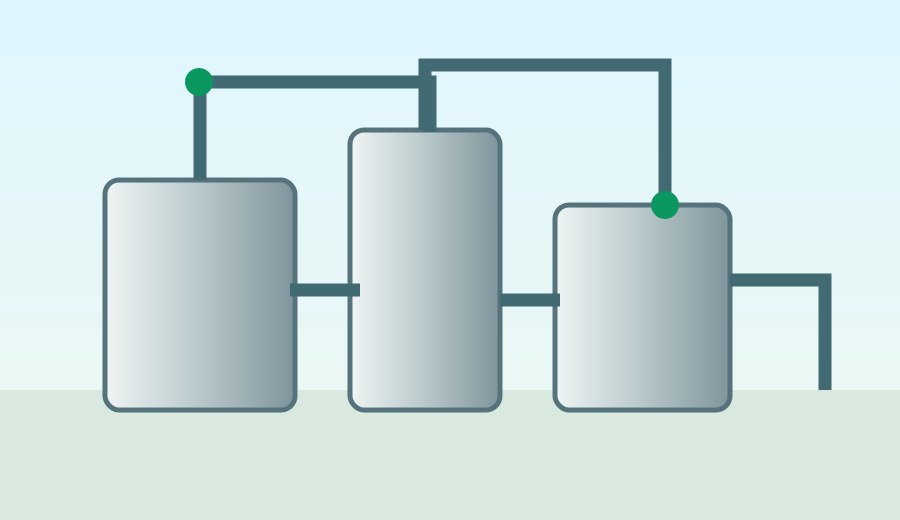
From proven separation systems to emerging destruction methods, the PFAS technology market spans detection, capture, concentration, remediation and final destruction.
Most real-world systems combine multiple steps. Removing PFAS from water is not the same as destroying it; capture technologies usually create a residual media or concentrate that still needs management.
Targeted LC-MS/MS methods, screening techniques and sampling protocols establish what is present and at what concentration.
02 CaptureGAC, ion exchange and high-pressure membranes are central technologies for PFAS removal from drinking water.
03 ManageSource control, groundwater treatment, soil washing and other site-specific strategies address contaminated media.
04 Destroy / disposeThermal treatment, underground injection, landfill management and emerging destruction technologies address concentrated PFAS wastes.
Adsorption-based treatment with substantial operating experience in drinking-water and groundwater applications.
Explore GAC →PFAS-selective anion exchange resins can deliver high capacity, with media selection driven by water chemistry and project objectives.
Explore IX →
High-pressure membranes can remove a broad range of PFAS but create a concentrated reject stream requiring management.
Explore membranes →
Supercritical water oxidation is among the emerging approaches being evaluated for destruction of concentrated PFAS waste streams.
Explore SCWO →Electrochemical approaches are being researched as destructive treatment processes for suitable PFAS-containing liquids.
Explore electrochemical →
Physical separation can shift PFAS from larger soil volumes into smaller concentrated residual streams for further management.
Explore remediation →Help build an independent global directory of PFAS solutions, projects and expertise.